




18:30 - 19:30
USI Auditorium
USI Auditorium


xxxxxx xxx (CH)
xxx xxxxxx (IT)
xxxx xxxx (CH)
xxxxx xx xxx (IT)
xxxxxxx xxx (IT)
Organizers
Part of
Organizers
Part of
Artificial intelligence is rapidly transforming biomedical research and opening new perspectives for understanding complex biological systems and improving patient care. The IBSA Foundation Forum Artificial Intelligence in Biomedicine: from basic research to clinical application will bring together leading experts from biology, medicine, and computational science to explore the latest advances and emerging perspectives in AI-driven biomedical research.
The Forum will provide a dynamic platform for presenting and discussing pioneering research, fostering interdisciplinary collaboration and promoting an integrated approach to translating innovations in artificial intelligence from fundamental discovery to clinical practice, with the ultimate goal of enabling more predictive and personalised healthcare.
🇬🇧 The event will be held entirely in English, and admission is free.
Artificial intelligence is enabling the development of digital twins, computational models that integrate multimodal biological and clinical data to represent and predict the behaviour of individual patients. By combining data-driven learning with mechanistic and causal approaches, these models allow the simulation of disease progression and treatment responses. This session will explore recent advances in AI-driven patient modelling and their potential to support diagnosis, therapeutic decision-making, and personalised treatment strategies.
Artificial intelligence is redefining what is possible in molecular medicine, enabling the transition from predicting the properties of known molecules to designing entirely new ones. By combining generative models with structural and biophysical knowledge, AI is accelerating the discovery of novel proteins, antibodies, and small-molecule therapeutics with tailored properties — compressing discovery timelines and expanding the boundaries of what can be engineered. This session will highlight recent advances in AI-driven molecular design, examining how computational approaches are bridging the gap between predictive modelling and the generation of viable drug candidates, and where the most promising — and most challenging — frontiers remain.
Session 1
09:00 - 09:15 | INSTITUTIONAL GREETINGS AND FORUM INTRODUCTION
09:15 - 12:25 | DIGITAL TWINS AND PERSONALISED MEDICINE
09:15 – 09:55 | Giovanna Guidoboni, University of Maine (USA)
09:55 - 10:35 | Julie Josse, Inria - National research center for digital science (FR)
10:35 - 11:15 | COFFEE BREAK
11:15 - 11:45 | ORAL PRESENTATIONS (2) – CALL FOR ABSTRACTS
11:45 - 12:25 | Simone Pezzuto, Università di Trento (IT)
Session 2
14:00 - 17:50 | FROM MODELS TO MOLECULES - PROTEIN DESIGN AND COMPOUND DESIGN
14:00 - 14:40 | Gisbert Schneider, ETH Zurich (CH)
14:40 - 15:25 | Kamil Tamiola, Peptone Switzerland AG (CH)
15:25 - 16.00 | COFFEE BREAK
16:00 - 16:30 | ORAL PRESENTATIONS (2) – CALL FOR ABSTRACTS
16:30 - 17:10 | Janani Durairaj, University of Basel (CH)
17:10 - 17:30 | CLOSING REMARKS & AWARD CEREMONY
Lunch and Poster Presentations
12:25 - 14:00
During the lunch break, the poster presentation will provide a platform to share innovative research and insights. Contribute to the discussion by submitting your abstract.
The event programme is being finalised
The information, final schedule, and speakers will be updated gradually. For now, we recommend registering and saving the date.
Save the date and register for the Forum!

Lorem ipsum dolor sit amet, consectetur adipiscing elit. Nulla varius felis leo, et fringilla dolor sollicitudin a. Morbi vel sem sem.
Prof. Alessandro Ceschi, MD, M.Sc. - Chief Physician and Chief of Medical Education and Research, General Directorate, Ente Ospedaliero Cantonale (EOC) (CH)
Gianvito Grasso, Ph.D. - Senior Researcher, SUPSI, Dalle Molle Institute for Artificial Intelligence (IDSIA USI-SUPSI) (CH)
Prof. Stéphane Meystre, MD, Ph.D. - Director, Institute of Digital Technologies for Personalised Healthcare (MeDiTech), SUPSI (CH)
Silvia Misiti, MD, Ph.D. - Director, IBSA Foundation for scientific research, Head of Corporate Communication, IBSA Group (CH)
Prof. Giovanni Pedrazzini, MD. - Dean, Faculty of Biomedical Sciences, USI Università della Svizzera italiana; Consultant Cardiologist, Cardiocentro Ticino, EOC (CH)
Prof. Andrea Rizzoli, Ph.D. - Director, Dalle Molle Institute for Artificial Intelligence (IDSIA USI-SUPSI) (CH)
Laura Azzimonti, Ph.D. - Senior Lecturer and Researcher, SUPSI, Dalle Molle Institute for Artificial Intelligence (IDSIA USI-SUPSI); Group Leader, Machine Learning for Bioinformatics and Personalised Medicine, Swiss Institute of Bioinformatics (SIB) (CH)
Andrea Cavalli, Ph.D - Group Leader, Computational Structural Biology at Institute for Research in Biomedicine (IRB) and at Swiss Institute of Bioinformatics (SIB) (CH)
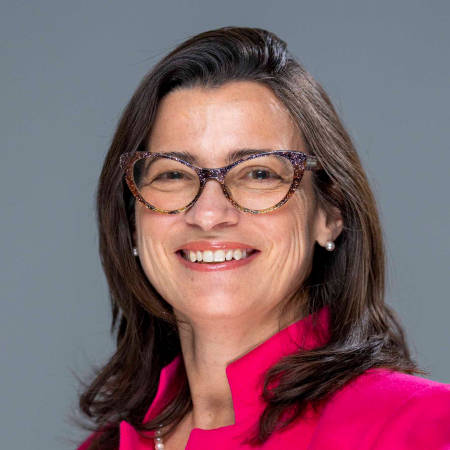
Digital twins can shift medicine from reacting to disease to predicting it, but only if they are interpretable, generalizable, and trusted by clinicians. This lecture presents digital twins that combine mechanism-driven, physics-based modeling with data-driven methods from machine learning and artificial intelligence. In glaucoma, a digital twin of ocular hemodynamics identified blood flow profiles linked to a higher risk of disease progression [1], with meaningful results in independent cohorts from Singapore and Thessaloniki. In cardiovascular care, mechanistic models interpret heartbeat signals from sensors embedded in mattresses and recliner chairs, so nothing needs to be worn [2,3]. Already deployed in assisted living facilities, these technologies help thousands of older adults live safely and independently. I will close with the challenges of moving digital twins from research prototypes to clinical practice.
Guidoboni G, Keller JM, Wikle CK, Rai R, Joyce M, Ibrahim O, et al. Digital twin for ocular hemodynamics: combining physiology-based modeling and machine learning for personalized glaucoma care. Math Biosci Eng. 2026;23(3):678–701. doi:10.3934/mbe.2026026.
Guidoboni G, Sala L, Enayati M, Sacco R, Szopos M, Keller JM, et al. Cardiovascular function and ballistocardiogram: a relationship interpreted via mathematical modeling. IEEE Trans Biomed Eng. 2019;66(10):2906–2917. doi:10.1109/TBME.2019.2897952.
Giovanna Guidoboni is Vice President for Research at the University of Maine and the University of Maine at Machias, and Professor of Electrical and Computer Engineering. Her research combines mathematical modeling and data science in medicine. An entrepreneur, she founded Gspace LLC, co-founded the journal Artificial Intelligence in Vision and Ophthalmology, and serves as Chief Scientific Advisor for Mechanica Biosystems. She is a member of the European Academy of Sciences and Arts and a Fellow of the American Institute for Medical and Biological Engineering.
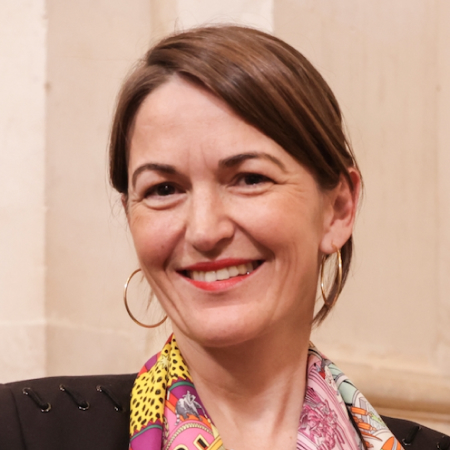
Randomized controlled trials (RCTs) are the gold standard for evidence-based medicine, but their restrictive eligibility criteria can limit the generalizability of their findings to patients treated in routine clinical practice. This talk presents modern causal methods to bridge this gap and improve the translation of trial evidence into real-world care.
We first discuss transportability and generalization, focusing on how treatment effects estimated in trials can be extrapolated to target populations that differ in their characteristics. We then consider how these approaches can be extended to combine evidence from multiple trials and observational data sources. In this context, federated causal learning offers a promising alternative to traditional data pooling and meta-analysis, allowing treatment effects to be estimated across decentralized datasets without sharing individual-level data.
Together, causal generalization and federated learning provide a scalable framework for combining evidence while preserving causal interpretability and data privacy. These methods could contribute to more relevant clinical evidence, better treatment decisions, and ultimately more personalized care.
Julie Josse is a senior researcher at Inria , where she leads the PreMeDICaL team in collaboration with Inserm. The team specializes in advancing precision medicine through causal learning and federated approaches that ensure medical data confidentiality, aiming to accelerate targeted therapy development and deploy decision-support algorithms with quantified prediction uncertainty.
Julie specializes in handling missing data, causal inference, and applying machine learning to multi-source, multi-modal health data, improving decision-making in areas such as respiratory disease, oncology, and fertility. She also led the Traumatrix project, creating AI-decision-support tools for ambulance trauma care optimization. A strong advocate for reproducible research, she actively contributes to open-source R software.
Before joining Inria in 2020, Julie was a professor at École Polytechnique, where she directed the Data Science for Business Master’s program in collaboration with HEC. She has held visiting positions at Stanford University and Google Brain Paris and has been recognized with honors such as the Inria–French Academy of Sciences Young Researchers Prize and a Marie Curie mobility grant.
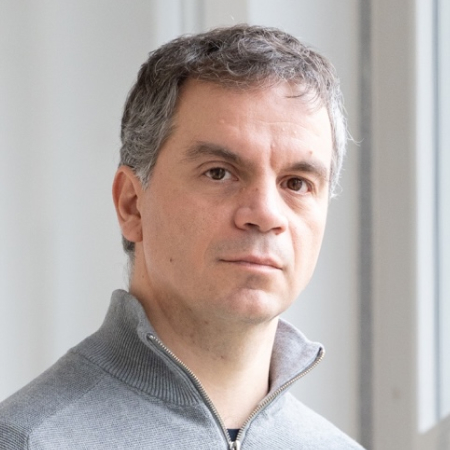
Cardiac digital twins aim to turn routinely acquired clinical data into patient-specific, predictive models of the heart. Yet their clinical translation is limited by the amount of data, computational cost and uncertainty in model personalization. We combine mechanistic cardiac modelling with scientific machine learning to address these barriers. I will show how generative models can reconstruct cardiac anatomy from sparse observations, how the ventricular conduction system can be inferred probabilistically from the 12-lead ECG, and how physics-informed reduced models can make electrophysiology simulations fast enough for repeated inference. These developments bring cardiac digital twins closer to use with standard clinical measurements such as echocardiography and ECG.
Simone Pezzuto is Full Professor of Numerical Analysis at the University of Trento and an external collaborator at the Euler Institute, USI. His research lies at the intersection of applied mathematics, cardiac modelling and scientific machine learning, with a focus on patient-specific cardiac digital twins, uncertainty quantification and clinically relevant applications. He is the recipient of an ERC Consolidator Grant and participates in the TrackAF and MICROCARD European consortia.
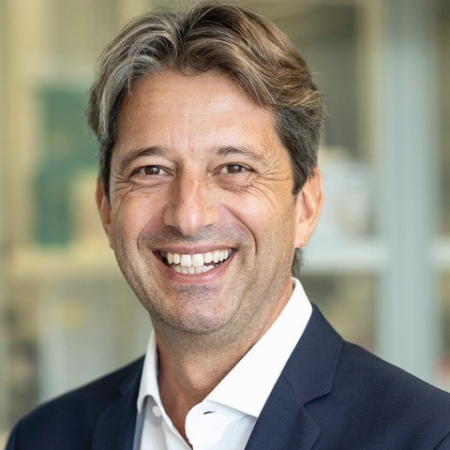
Generative AI streamlines early-stage drug discovery by designing novel molecules with favorable pharmacological profiles. By prioritizing synthetically tractable molecules, these predictive models overcome a traditional limitation of computational de novo design and accelerate hit-to-lead optimization. However, data scarcity remains a critical bottleneck to predictive precision. Model training with the ligand-target interactome mitigates this limitation through a joint representation of the complex relationship between targets and ligands. When integrated with active learning, experimental validation, and late-stage functionalization, this paradigm compresses design-make-test-analyze cycles while drastically reducing material consumption. We outline recent prospective applications of generative AI in both ligand- and structure-based drug design, focusing on de novo candidate generation in limited-data scenarios, reaction prediction, and machine learning-driven scaffold hopping.
Gisbert Schneider is Professor of Computer-Assisted Drug Design at ETH Zurich. He previously worked at Roche and Goethe University, and served as Director of the Singapore-ETH Centre. A company co-founder with over 450 scientific papers, his pioneering work in AI-driven medicinal chemistry has earned him major honors, including the Ernst Schering Prize.
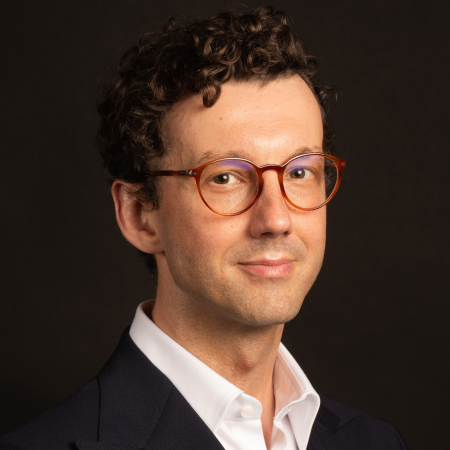
The androgen receptor remains a central driver of advanced prostate cancer, yet current therapies largely target its ligand-binding domain and can be undermined by resistance mechanisms that preserve receptor signalling. Peptone is pursuing a first-in-class strategy against the intrinsically disordered androgen receptor N-terminal domain (AR-NTD), a transcriptional control region without a single stable structure. This talk will describe how we combine experimental biophysics, molecular simulation and AI to map dynamic conformational ensembles, identify transient ligandable states and guide small-molecule discovery. I will discuss the scientific principles behind ensemble-first drug design, the iterative connection between computation and experiment, and how this approach may open a new therapeutic route for patients with treatment-resistant prostate cancer.
Dr Kamil Tamiola is a physicist and founder and CEO of Peptone. Inspired by Sir Christopher Dobson's work at the University of Cambridge, he trained in NMR spectroscopy, molecular simulation and the biophysics of intrinsically disordered proteins. He founded Peptone to unite experimental biophysics, high-performance computing and AI for first-in-class drug discovery. He also serves in the Swiss Economic Forum's SME Parliament.
The breakthroughs recognized by the 2024 Nobel Prize in Chemistry demonstrated that the biophysics of protein structure is encoded in evolutionary signals extracted from millions of sequences. This unlocked large-scale mapping of the protein universe, connecting poorly characterized proteins to known structures and functions at unprecedented scale, and revealed something more fundamental: that evolutionary pressure is itself a compression of physical constraints, rich enough that structural signal can be extracted in discrete form from sequence alone and used to design proteins with no counterpart in nature. But protein structure is only the beginning. Does the same logic extend to how proteins bind small molecules, interact with each other, respond to mutations, and can be engineered for new functions?
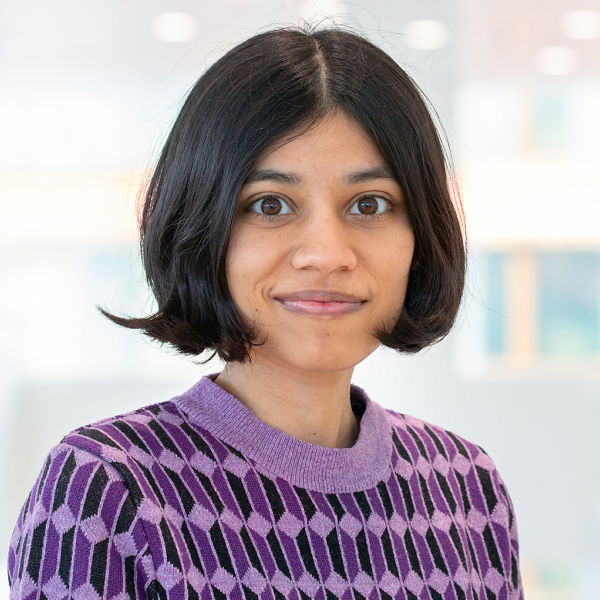
Jay is an Assistant Professor at the University of Lausanne, working on context-aware deep-learning methods for protein structure, molecular interactions, and protein design. Her group focuses on representation learning and generalizable modelling of biomolecular complexes, with the goal of developing more reliable methods for understanding and designing proteins.