

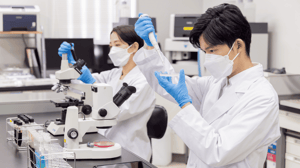
In future it will perhaps be possible to use stem cells to treat some serious diseases of the nervous system, moving beyond the limits of existing treatments. Twenty years on from their discovery, so-called induced pluripotent stem cells are today behind a decisive step towards the medicine of the future: in Japan, the world's first treatments based on these special reprogrammed cells have received approval. One of these, in particular, is opening up new possibilities for a cure for Parkinson's disease. It's a scientific milestone that, even though caution is still required, could radically change the way we deal with this and other diseases.
Induced pluripotent stem cells: what makes them so revolutionary?
These are adult stem cells, extracted for example from the skin, that are “taken back” through their evolutionary journey using a special technology. In this way they reacquire the capacity, typical of the primitive cells present in the very early stages of life in the uterus, to differentiate into almost any type of cell in the body. Using the technology developed by Japanese researcher Shinya Yamanaka (winner of the 2012 Nobel Prize), cells can be obtained that have similar properties to embryonic cells but without the use of embryos, thus overcoming one of the main ethical limitations of this research.
Their therapeutic potential, which is the focus of the research, opens the way to so-called regenerative medicine, that is, the possibility of replacing damaged cells with new, functioning cells in order to repair tissues and treat various diseases. This is the principle underlying the use of induced pluripotent stem cells in Parkinson’s.
Parkinson's: a disease still lacking a definitive cure
A neurodegenerative disease involving the progressive loss of the neurons that produce dopamine, a neurotransmitter essential for controlling movement, Parkinson's is currently diagnosed mainly by observing its symptoms (although some pioneering studies suggest that other innovative strategies can be used). The drug most widely used for treatment is levodopa, which temporarily compensates for the lack of dopamine and so reduces symptoms, but does not halt degeneration. Over time, however, it's efficacy tends to diminish.
From theory to practice: the first approved treatment
The stem cell therapy approved by Japan's Health Ministry for treating Parkinson's is based on induced pluripotent cells that, following “modification”, transform themselves into new dopaminergic neurons; implanted into the brain, they replace those that have been lost. The clinical study on which the approval was based, published in Nature in 2025, involved a small group of patients and showed promising results in terms of both safety and possible improvements in motor symptoms. After two years of follow-ups, the transplanted cells have shown they can survive, produce dopamine and become integrated into the brain without serious side effects.
A revolution, but a cautious one
Despite the enthusiasm, the experts advise caution. The approval given is indeed “conditional and time-limited”: the treatment can only be used on selected patients while further data is being gathered to confirm its efficacy and safety. Moreover, the number of patients involved so far remains limited and various questions are still to be answered, including the duration of the effects of the treatment over the long term and the feasibility of using it at scale.
In any case, the go-ahead given in Japan marks a turning point. These are not the first trials of innovative treatments for Parkinson's; nevertheless, in this case, and for the first time, a technology created in the laboratory is being definitively introduced into clinical practice, transforming theory into actual treatment. Specifically, the approach using induced pluripotent stem cells marks a paradigm shift: from managing symptoms alone to an attempt to reconstruct damaged neural circuits. Over the coming years, if the results are confirmed, we’ll see a new generation of therapies able to intervene in the root cause of neurodegenerative diseases.